A Beet on the Seder Plate, A Lifeline in Kharkiv
March 20, 2026
When you set your Seder table this year, consider adding one more item: a beet.
Jewish families in Atlanta, London, and Ukraine are placing a beet on the Seder plate as a symbol of hope and solidarity with the Jewish community in Kharkiv. In Hebrew, a beet is called selek, from a root meaning “to remove”, a prayer that hardship and fear might be lifted away.
The idea grew out of a partnership between the Marcus Jewish Community Center in Atlanta, JCC Cares in London, and JCC Beit Dan in Kharkiv through JCC Global’s Good to Great cohort, a collaborative initiative connecting Jewish community centers around the world. Through this partnership, leaders in Atlanta have built relationships with the Kharkiv community and worked together on projects supporting Jewish life during the war.
As the Modern Seder Plate Addition explains, “We place this beet here to remind us of a modern plague: the fear, displacement, and challenges faced by Ukrainian Jews during this long and difficult war.”
The reading continues: “Like a root that holds fast in the earth, the Jewish community of Ukraine has remained strong, connected, and hopeful, even in the harshest seasons… May the roots of Jewish life everywhere continue to hold strong.”
For the Jewish community in Kharkiv, that hope is deeply real, and the symbolism of the beet is deeply powerful.
As Ukrainian families prepare for Passover under the shadow of war, Federation donors are helping ensure that Jewish life there continues, even in the darkest moments. Through the relationships built in the JCC Global cohort, Atlanta leaders helped bring urgent needs in Kharkiv to the attention of the Jewish Federation of Greater Atlanta, which last year provided an emergency grant to support mental health services for young people navigating trauma and uncertainty.
That support mattered.
In 2026 alone, Kharkiv has endured new strikes on its energy infrastructure. More than 1,000 residential buildings remain without central heating. Electricity can disappear for up to 18 hours a day. Public transportation stops during air raid sirens. Schools operate online when they can — but many children are still learning amidst the sound of explosions.
In the middle of that uncertainty, Jewish institutions have become lifelines.
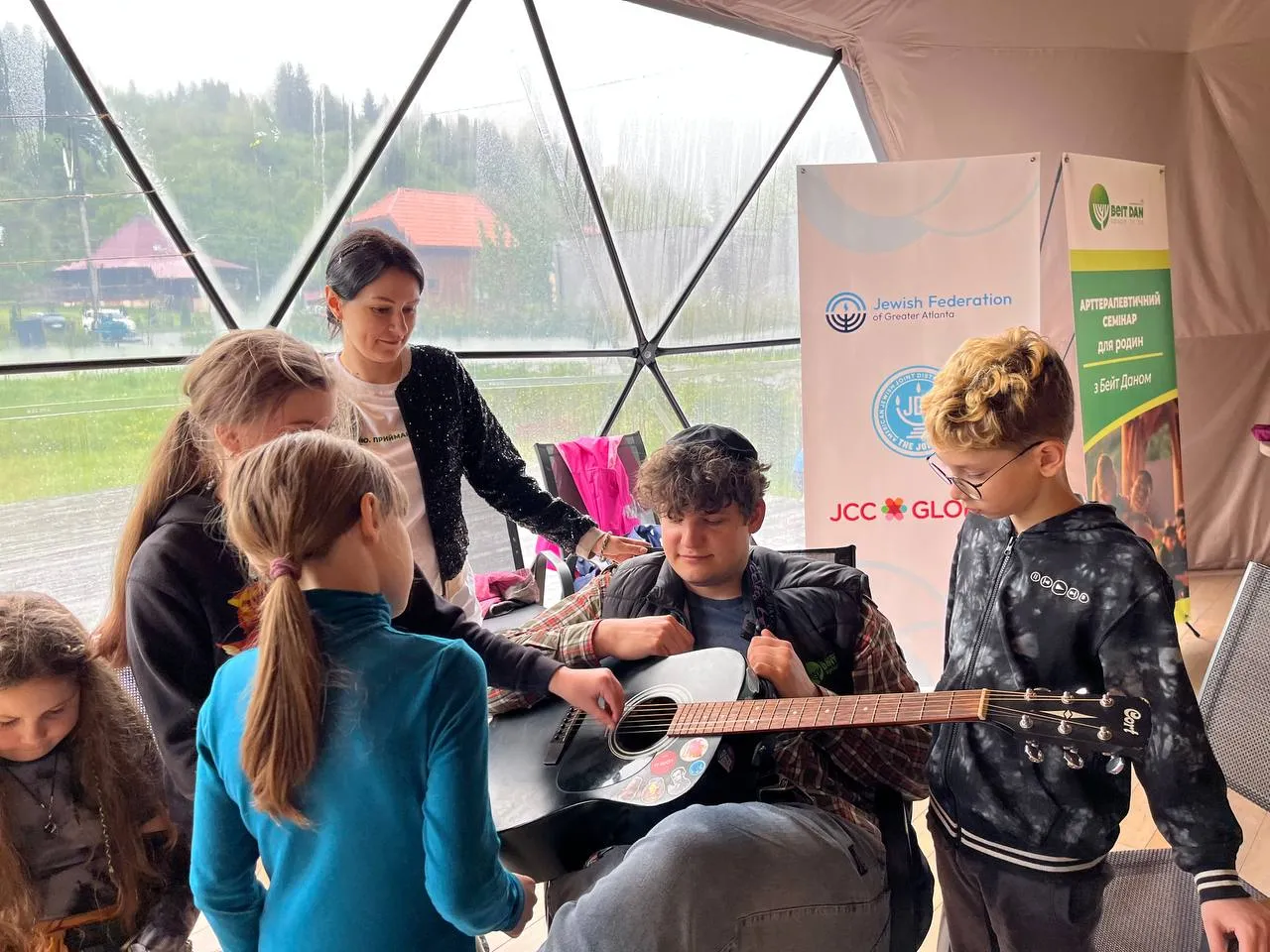
JCC Beit Dan continues to run youth programs, celebrate holidays, and provide a gathering place for families seeking connection and normalcy. In the same building, Hesed Shaarei Tikvah delivers critical welfare services to elderly residents, Holocaust survivors, and families at risk.
Both are part of Kharkiv’s Jewish communal infrastructure supported by the American Jewish Joint Distribution Committee (JDC), one of Federation’s core overseas partners in delivering our impact in Israel and around the world. The JDC established JCC Beit Dan and Hased Shaarei Tikvah decades ago and continues to provide funding, guidance, and operational support. Since the start of the war, JDC has expanded its emergency work, distributing humanitarian aid, opening a Trauma Support Center for therapy and counseling, and helping operate a “Warm Hub” where community members can access heat, food, electricity, and internet during blackouts.
Even small things, a lit room, a warm meal, a moment of safety, can mean everything, and can ‘remove’ some fear, if only for a moment.
For Federation donors, this is what global Jewish responsibility looks like in real time. Your support becomes heat during a blackout, food when families cannot cook, and psychological care for children growing up with daily sirens. It ensures that Jewish life in Kharkiv, a community more than 250 years old, continues, even now.
The Passover connection feels especially powerful for those involved in the partnership.
“Being part of JCC Global’s Good to Great cohort has been an incredible experience,” said Janel Margaretta, Chief Impact Officer at the Marcus JCC in Atlanta. “Meeting our partners, working together, learning together, and reminding our local community that Jews in Ukraine are suffering right now during this war has been deeply meaningful both personally and professionally.”
For Atlanta leaders, the collaboration has strengthened the sense that Jewish communities everywhere share a common story.
“My involvement with JCC Global’s cohort has been deeply meaningful,” said Ken Winkler, past board chair at Marcus JCC and current board member at Jewish Federation of Greater Atlanta. “Our work helps make a positive impact beyond our local community and strengthens our shared sense of identity.”
At the Seder, we retell the story of moving from narrow places toward freedom. This year, adding a beet to your seder plate offers a reminder that the story is still unfolding. Through the generosity of Federation donors, Jewish families in Kharkiv are not facing these challenges alone, and together we work to remove these hardships and fear.