Inclusion Grows When We Learn Together
September 25, 2026
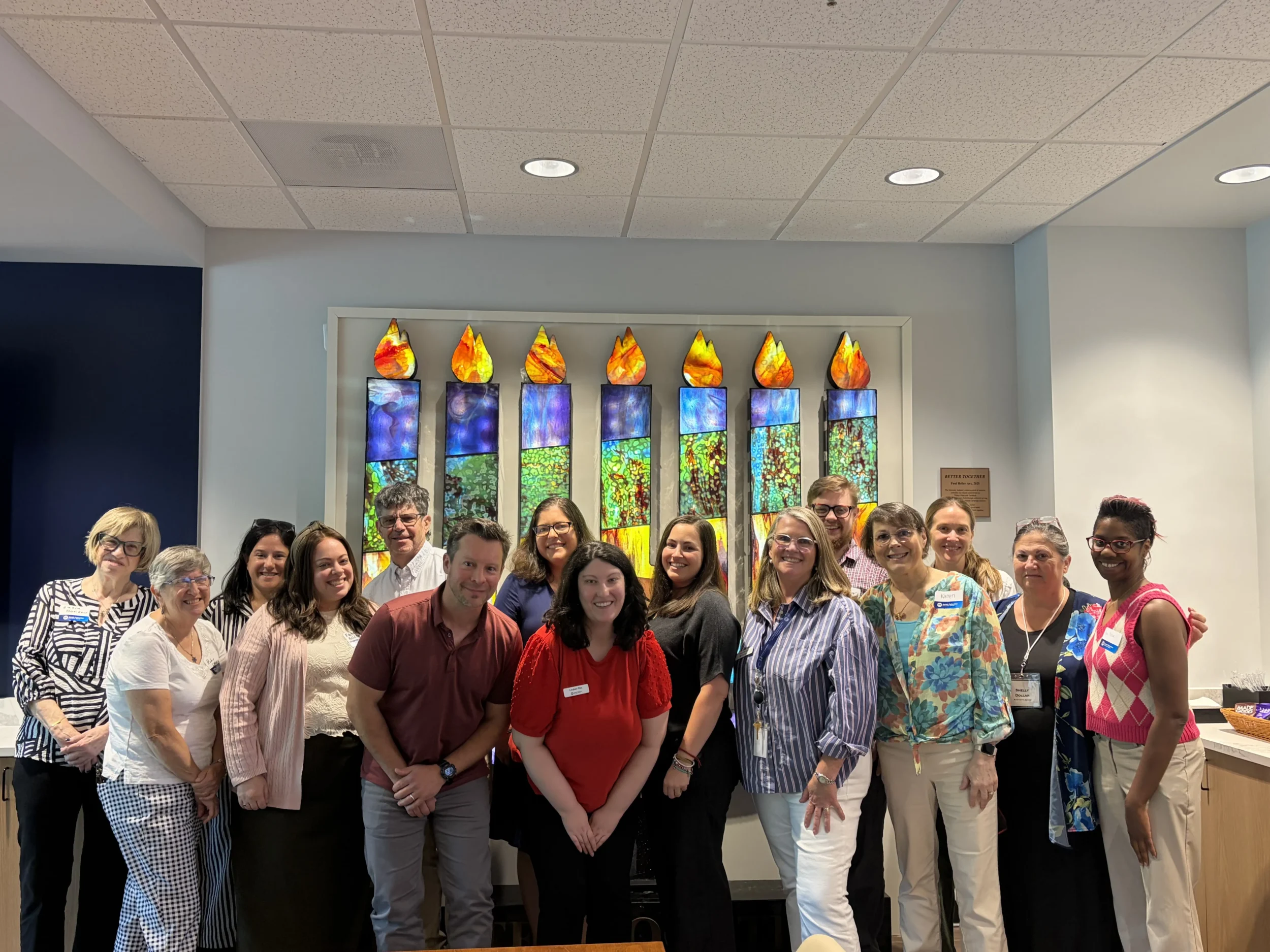
At Ahavath Achim Synagogue, Shelly Dollar has a vision for a permanent sensory space where anyone who needs a break from the sanctuary can find a place to breathe, reset and still feel part of the community.
For now, she creates one herself.
Before each holiday, Shelly transforms a temporary room into a calming space. Afterward, she takes it all down.
Across Jewish Atlanta, another synagogue has already taken the next step.
Temple Emanu-El’s, Koleinu (our voices), co-created by Susie Davidow and Mickey Rosner, has been working for nine years to make synagogue life more accessible. Among its efforts is the Shalom Sanctuary, a dedicated space just off the main sanctuary with fidgets and other resources for children and adults who may find it difficult to sit through a service.
Now, Jewish Federation of Greater Atlanta’s JAccess team is bringing Shelly, Susie, and other inclusion leaders from synagogues across Atlanta together through the new Synagogue Inclusion Committee Network.
For Shelly, who currently serves as a committee-of-one, that means she no longer has to figure out every next step alone.
She plans to visit a synagogue with a permanent sensory space, see how it works, and bring those lessons back to Ahavath Achim.
For Susie, whose committee has grown to roughly eight to ten members and is highly integrated and recognized in the Temple Emanu-El community, the network is a chance to share what her congregation has learned over nearly a decade. When Koleinu began, Susie and Mickey looked to other synagogues for guidance. Now, she wants to do the same for others, offering newer leaders the chance to visit Emanu-El, listen in on committee meetings, and ask questions.
That exchange is exactly what Federation is uniquely positioned to make possible.
The network brings together congregations of all kinds, with established committees, people just beginning the work, and everyone in between. Instead of every synagogue developing resources, solving problems, and learning lessons independently, Federation can convene them, connect them with JAccess expertise and resources, and help good ideas travel across the community.
“We really want JAccess to be a space to learn, a space to grow, and a space to share that inclusion is always changing,” said Lindsey Flax, Federation’s JAccess Training Coordinator.
Through JAccess, that learning comes with practical resources. Lindsey can provide synagogue staff with training on best practices and conduct accessibility assessments at no cost, helping congregations identify barriers and understand what meaningful inclusion can look like in their own spaces.
That work is part of Federation’s broader Caring for Those in Need impact area, where donor support helps remove barriers that can keep people from fully participating in Jewish life. By investing in JAccess professionals and resources, donors help Jewish organizations move from wanting to be inclusive to knowing how to make meaningful changes.
At Emanu-El, Susie points specifically to Federation funding that helped make inclusive programming possible, including grant funding from JAccess that supported the Shalom Sanctuary.
And those changes can start with something as simple as one person learning from another.
“The more we create spaces where people with disabilities can participate fully, the more complete our Jewish community becomes,” Shelly said.
Because inclusion is not one synagogue’s responsibility. It is a community-wide learning journey.
And Federation donors are helping make sure no one has to make that journey alone.